Oral Cancer Screening in Littleton

Oral cancer screening in Littleton checks the mouth, tongue, gums, and surrounding tissues for unusual changes, supporting early detection and timely evaluation.

Oral Cancer Screening Near You

Early detection is the single most important factor in surviving oral cancer. At Summit Family Dentistry, we perform comprehensive oral cancer screenings as part of your routine checkup to catch suspicious tissue changes long before they become noticeable or painful.

Dr. Richard Harvey, Dr. Morgan Yoxall, Dr. Amanda Miller, and Dr. Eugenio “Gene” Montecinos utilize detailed visual and tactile examinations to protect your health, giving you absolute peace of mind at every visit.
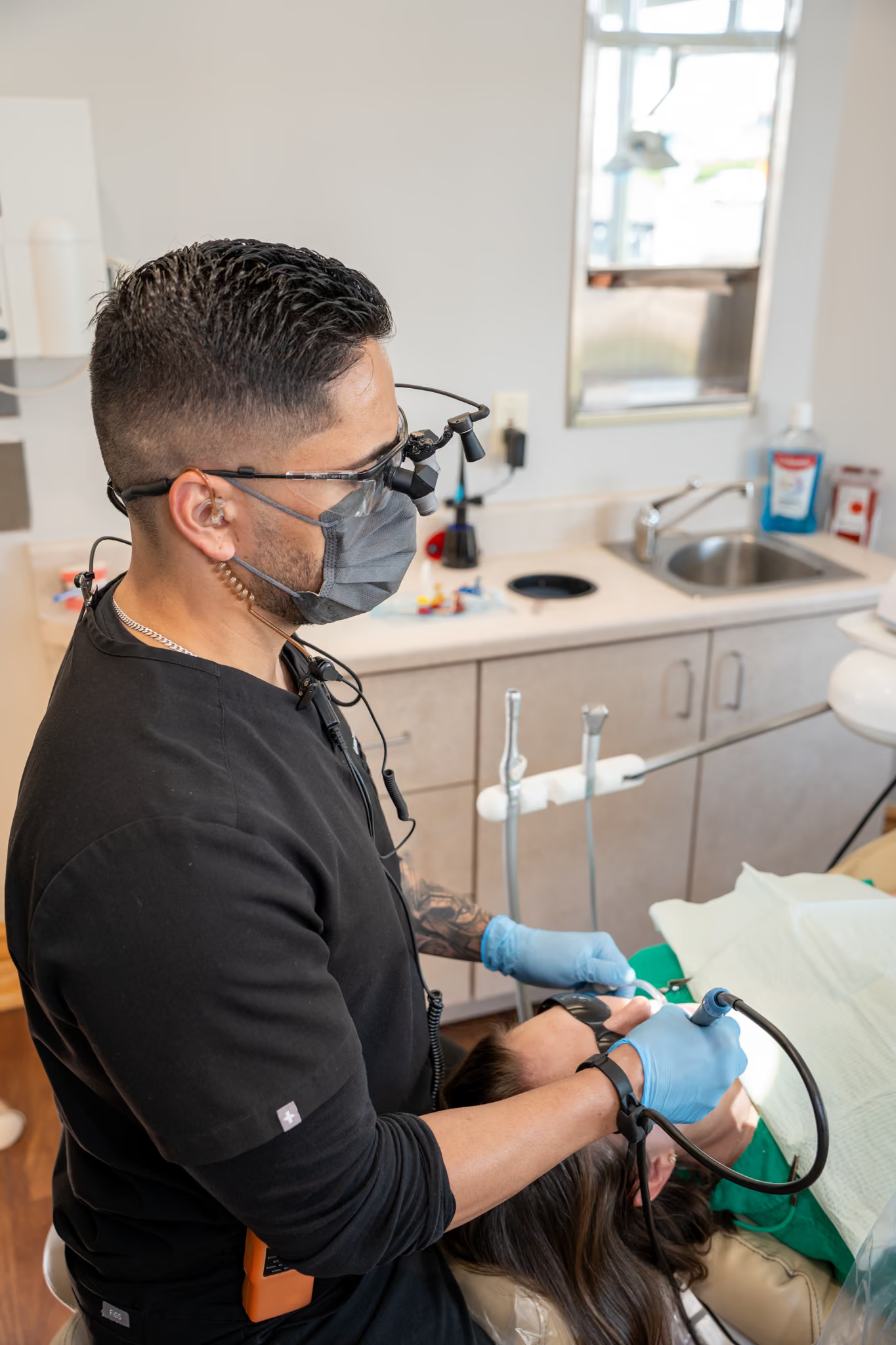
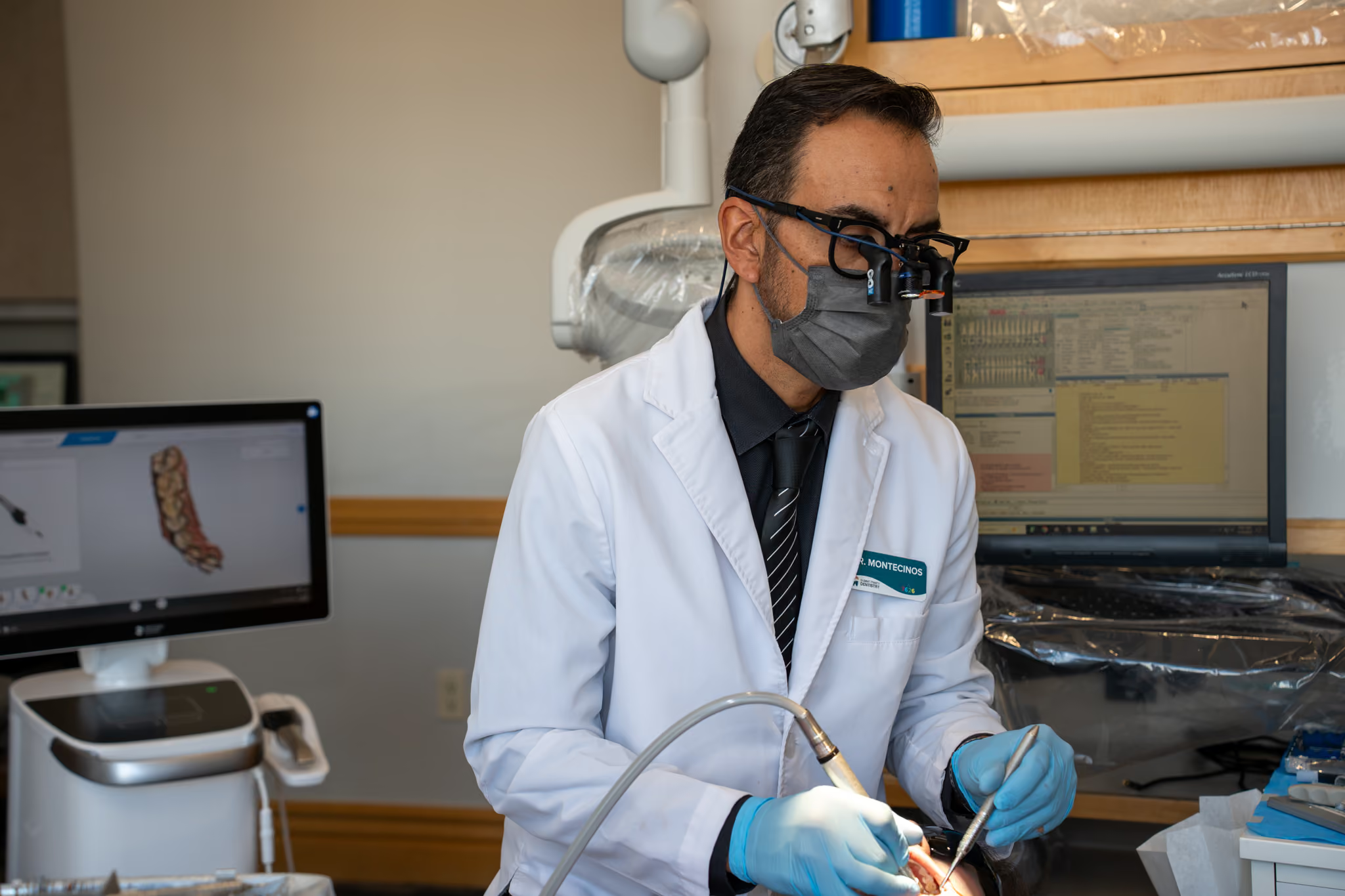
Dentist wearing black scrubs, protective glasses with magnifying loupe, face mask, and blue gloves performing a dental procedure on a patient lying back in a dental chair.

Why Early Detection Matters

Oral cancer can develop on the lips, tongue, gums, cheek lining, roof or floor of the mouth, and throat. In its initial stages, oral cancer often produces zero pain or obvious symptoms, allowing it to go unnoticed without a professional evaluation.

When detected early before it spreads to regional lymph nodes the 5-year survival rate for oral cancer is over 80-90%. A simple 2-minute screening during your regular dental checkup is your best defense.

Who Is at Risk for Oral Cancer?

While oral cancer can affect anyone even those with no known risk factors certain habits and conditions increase your vulnerability
  • Tobacco Use
    Cigarettes, cigars, pipes, and smokeless chewing tobacco account for a majority of oral cancers.
  • Heavy Alcohol Consumption
    Frequent or heavy alcohol use significantly raises risk, especially when combined with tobacco.
  • HPV (Human Papillomavirus)
    The HPV-16 virus strain is increasingly linked to cancers located at the back of the mouth and throat, particularly in younger non-smokers.
  • Sun Exposure
    Frequent sun exposure without UV protection increases the risk of lip cancer.
  • Age & Gender
    Men over age 45 face a statistically higher risk of developing oral lesions.
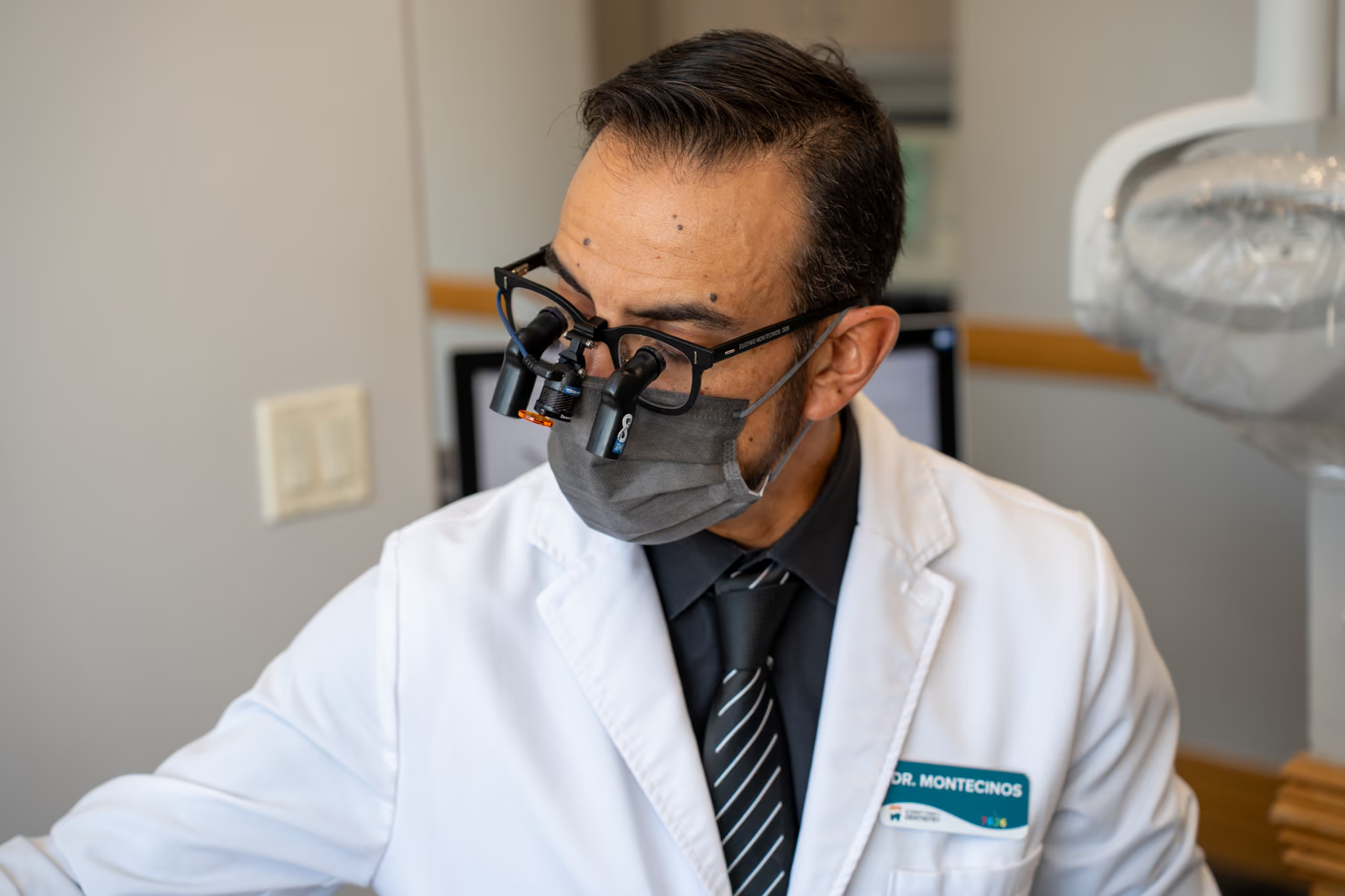
A male dentist wearing a white coat, black tie, and magnifying dental loupes over glasses, with a gray face mask, looking down while working in a dental office.

What Happens During an Oral Cancer Screening?

An oral cancer screening near you is fast, completely non-invasive, and painless. During your examination, your dentist will

01
Visual Exam
Inspect your lips, gums, tongue, inside of your cheeks, palate, and back of your throat for red or white patches, unusual sores, or asymmetry.
02
Tactile Exam
Gently feel your jaw, neck, under your chin, and soft tissues in your mouth to check for unusual lumps, hard nodules, or tissue thickening.
03
Follow-Up Guidance
If any atypical tissue is identified, we will either re-evaluate it in 14 days or seamlessly coordinate a biopsy or referral for further diagnostic testing.

Symptoms You Should Never Ignore

Between routine checkups, contact our office right away if you notice any of the following persistent symptoms lasting longer than two weeks
  • A sore or ulcer on your lips, gums, or mouth lining that bleeds easily and won't heal
  • Red or white patches on your gums, tongue, or mouth lining
  • Unexplained lumps, bumps, or thickening of tissue in your mouth or neck
  • Difficulty swallowing, chewing, or moving your tongue and jaw
  • A feeling that something is caught in your throat or persistent hoarseness

Protect Your Long-Term Health with a Fast, Painless Oral Cancer Screening

Catch subtle mouth changes early. Get a comprehensive oral cancer screening in Littleton, CO with your routine checkup at Summit Family Dentistry. Book today!

Group of Team Members WavingMountain Line Vector

Oral Cancer Screening FAQs

Does an oral cancer screening hurt?
FAQ Plus Icon
No, not at all. The screening is a fast, completely painless visual and physical evaluation of your mouth, face, and neck that takes only 2 to 3 minutes during your routine cleaning and exam.
How often should I get screened for oral cancer?
FAQ Plus Icon
We recommend an oral cancer screening at least once a year, which we naturally integrate into your bi-annual checkups. If you have higher risk factors (such as a history of tobacco use or HPV), we evaluate your soft tissues during every routine visit.
What happens if the dentist finds a spot or abnormality?
FAQ Plus Icon
If we discover a suspicious spot or lump, don't panic—the vast majority of lesions turn out to be benign conditions like minor trauma, canker sores, or non-cancerous changes. We typically monitor the area for 10-14 days to see if it heals naturally, or we help arrange a quick biopsy to get a definitive answer.