Gum Disease Treatment in Littleton

Gum disease treatment in Littleton addresses bleeding, swelling, and periodontal concerns with targeted care to preserve gum health and dental stability.
Gum Disease Treatment Near You

Bleeding, swollen, or tender gums are more than just an inconvenience; they are early warning signs of periodontal (gum) disease. At Summit Family Dentistry, we provide targeted, effective gum disease treatment in Littleton, CO 80127 to stop infection in its tracks and restore your foundation for a lifetime of healthy teeth.

Using gentle, advanced periodontal techniques, Dr. Richard Harvey, Dr. Morgan Yoxall, Dr. Amanda Miller, and Dr. Eugenio “Gene” Montecinos help you eliminate infection, reduce gum pockets, and prevent tooth loss.
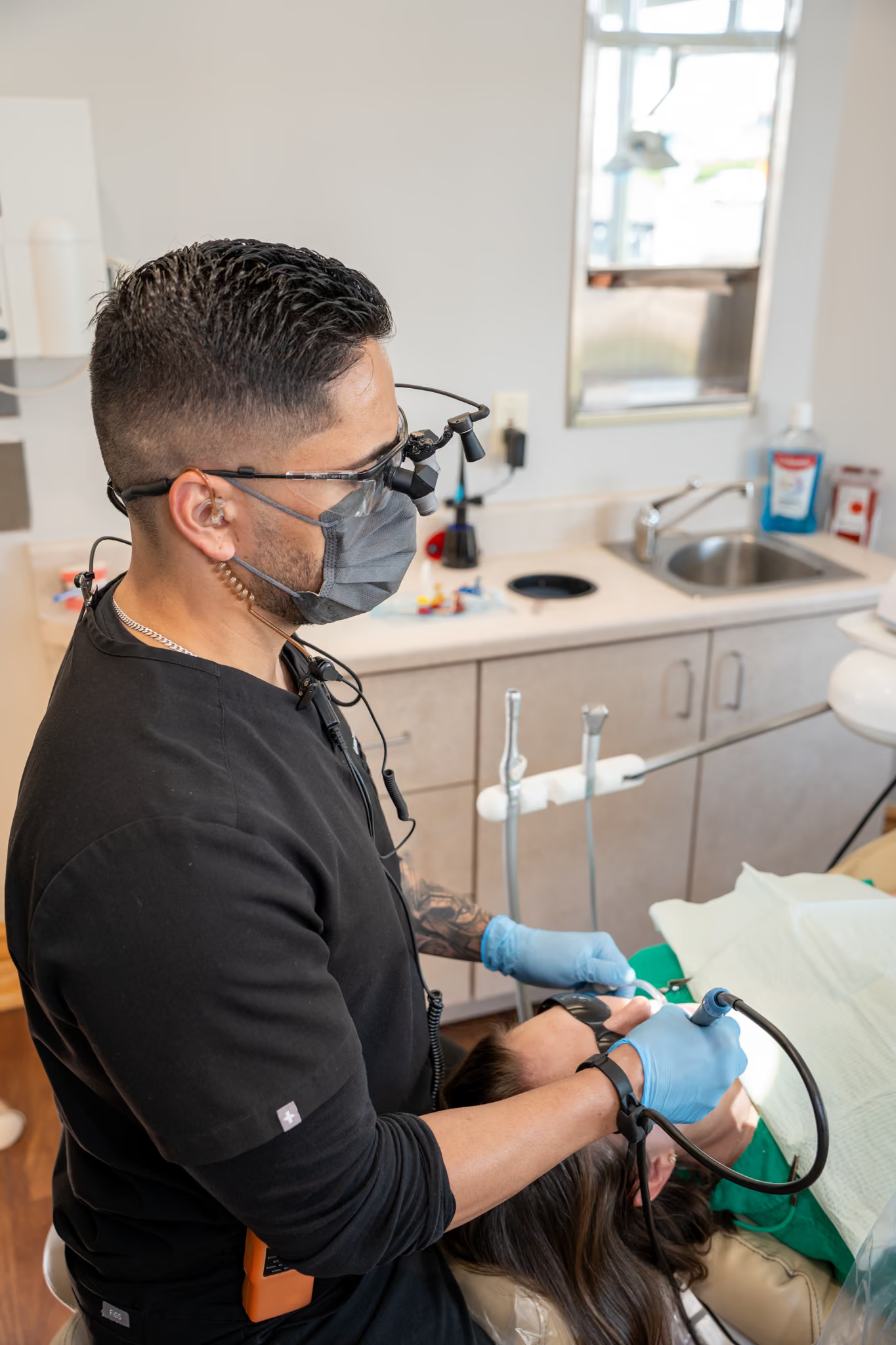
Dentist wearing black scrubs, protective glasses with magnifying loupe, face mask, and blue gloves performing a dental procedure on a patient lying back in a dental chair.

Understanding Gum Disease: Gingivitis vs. Periodontitis

Gum disease is a bacterial infection of the tissues that hold your teeth in place. It typically develops in two distinct stages

01
Gingivitis (Early Stage)
Caused by plaque buildup, gingivitis causes red, swollen gums that bleed easily during brushing or flossing. Because the bone hasn't been impacted yet, gingivitis is fully reversible with professional care and improved oral hygiene.
02
Periodontitis (Advanced Stage)
Untreated gingivitis progresses into periodontitis, where bacterial infection spreads beneath the gumline. This destroys the bone and supporting tissue, causing gums to pull away from teeth, create deep pockets, and ultimately lead to loose teeth or tooth loss.

Signs You Need Periodontal Care

You should seek a professional evaluation if you notice any of the following symptoms
  • Red, swollen, or tender gums
  • Gums that bleed when you brush or floss
  • Persistent bad breath (halitosis) or a sour taste in your mouth
  • Gums pulling away from your teeth (receding gums, making teeth look longer)
  • Pus between your teeth and gums
  • Changes in your bite or loose, shifting teeth
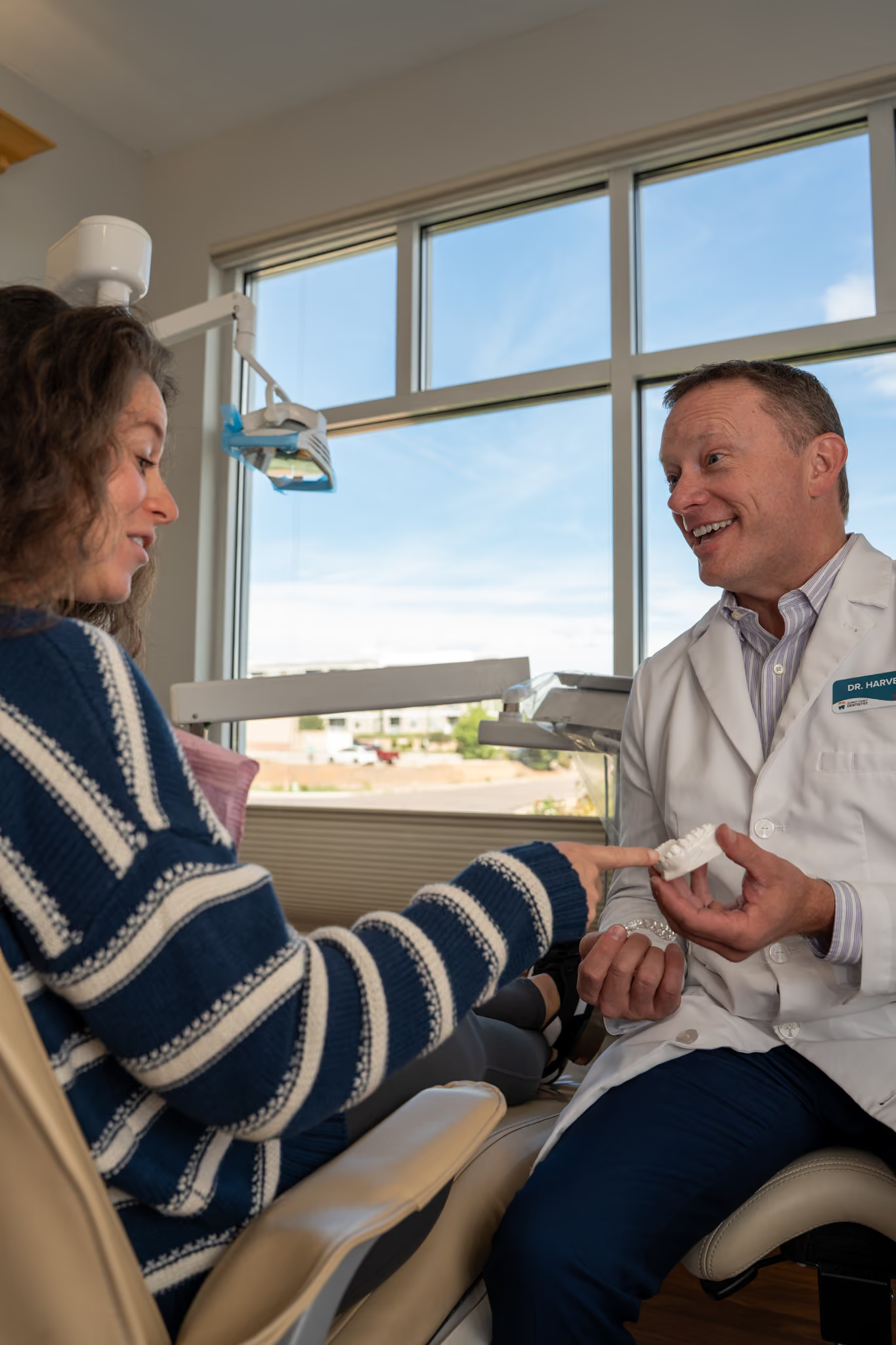
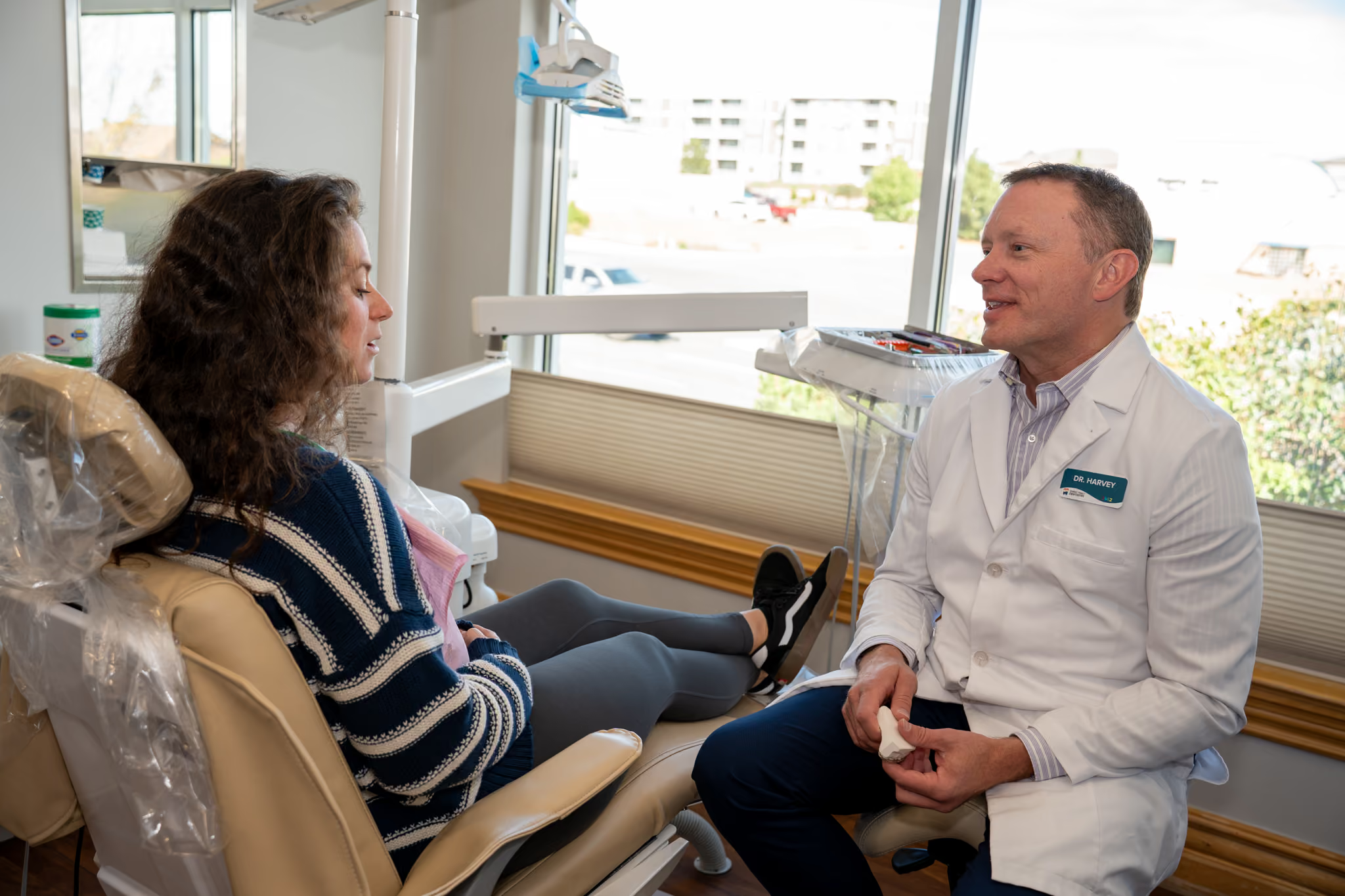
Dentist in a white coat labeled 'Dr. Harvey' talks with a female patient seated in a dental chair inside a clinic with a large window.
Three smiling medical professionals in black scrubs standing together in a hallway, with arms around each other, framed by beige columns and wooden accents.

Non-Surgical Gum Disease Treatments We Offer

We prioritize conservative, non-surgical periodontal therapies to eliminate bacteria and promote healing:

  • Scaling & Root Planing (Deep Cleaning)
    The gold standard for treating periodontitis. We carefully numb the area and use specialized tools to remove plaque and tartar deep beneath the gumline (scaling). We then smooth the tooth root surfaces (planing) so bacteria have a harder time attaching, allowing your gums to heal and reattach tight around the teeth.
  • Periodontal Maintenance
    Once active gum disease is controlled, regular 6-month cleanings aren't enough to keep bacteria at bay. Periodontal maintenance visits every 3 to 4 months ensure deep pockets remain clean, preventing the infection from returning or progressing.

The Connection Between Gum Disease and Overall Health

Gum disease doesn't just stay in your mouth. The inflammation and bacteria from infected gums can enter your bloodstream, raising your risk for serious systemic health issues, including

  • Heart disease and stroke
  • Complications in managing diabetes
  • Respiratory infections
  • Pregnancy complications

Treating your gums protects your entire body, not just your smile.

Stop Gum Disease Before It Causes Tooth Loss

Don't ignore bleeding or tender gums. Get gentle, effective gum disease treatment near you in Littleton, CO 80127 at Summit Family Dentistry. Book your exam now!

Group of Team Members WavingMountain Line Vector

Gum Disease FAQs

Can gum disease be completely cured?
FAQ Plus Icon
Gingivitis (the early stage of gum disease) can be completely reversed with a professional cleaning and improved daily brushing and flossing. Periodontitis (advanced gum disease) cannot be permanently "cured" because lost bone tissue doesn't naturally regrow, but it can be successfully managed and controlled with deep cleanings and routine periodontal maintenance to prevent further damage.
Does a deep cleaning (scaling and root planing) hurt?
FAQ Plus Icon
No. We thoroughly numb your gums with local anesthesia prior to the procedure so you feel completely comfortable. If you experience dental anxiety, we also offer relaxed sedation options (like nitrous oxide or oral sedation) to keep you entirely at ease throughout your appointment.
How often do I need cleanings if I have periodontitis?
FAQ Plus Icon
Patients with active or past periodontitis typically need periodontal maintenance cleanings every 3 to 4 months. Bacteria colonies beneath the gumline mature and cause damage in roughly 90 days, so coming in quarterly keeps the infection dormant and protects your bone structure.